
You lint-rolled your couch this morning. Then again this afternoon. Your dog walked past the window and you briefly mistook the backlit fur cloud for smoke. If April in your house looks something like this, welcome to shedding season — the most dramatic, most misunderstood, and most Googled dog-owner complaint of the spring.
The good news: it's almost certainly normal. The better news: there's more you can do about it than just brushing more often. Here's what's actually happening in your dog's coat right now, and how to manage it in a way that makes a real difference.
Why April is peak shedding season for most dogs
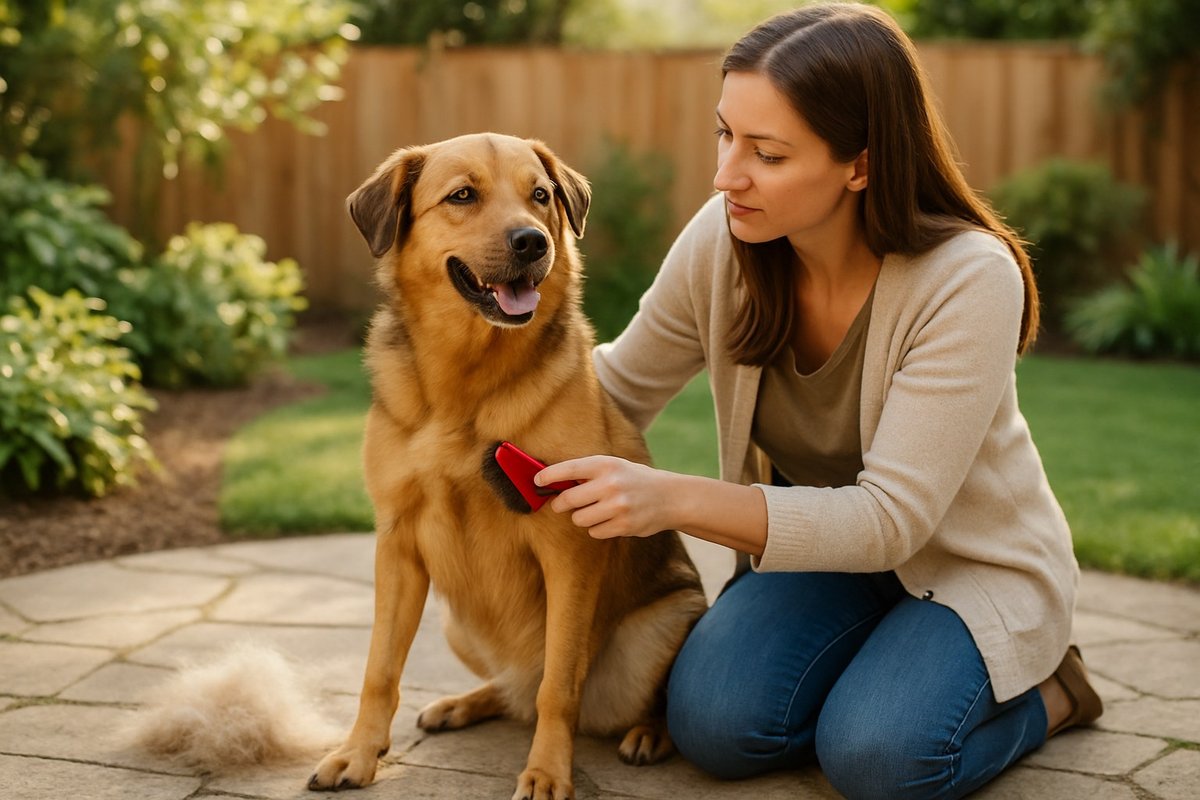
Dogs don't shed randomly. Shedding is triggered by photoperiod — the amount of daylight your dog is exposed to each day. As spring arrives and days get longer, a message travels through your dog's hormonal and nervous system that essentially says: winter coat, you're done here.
The result is what groomers call a "coat blowout." Your dog's dense, insulating undercoat — the soft, fluffy layer underneath the outer guard hairs — loosens and releases in large quantities over the course of several weeks. For double-coated breeds like Huskies, German Shepherds, Corgis, and Golden Retrievers, this can look genuinely alarming. Tumbleweeds in the hallway. Fur in your coffee. The works.
Single-coated breeds aren't off the hook
Even dogs without a traditional undercoat — Poodles, Maltese, Shih Tzus — experience increased shedding in spring, just at a lower volume. Their coat cycles still respond to light and hormonal shifts. So if your "low-shedding" dog is suddenly leaving more hair than usual, the season is almost certainly the reason.
Temperature matters less than you'd think
Many people assume dogs shed because it's getting warmer. Temperature does play a small role, but light exposure is the dominant driver. This is why indoor dogs — who are exposed to artificial light year-round — often shed more continuously throughout the year rather than in one defined wave. Their systems get mixed signals. If you have a dog who seems to shed non-stop regardless of season, this is likely why.
Beyond brushing: what actually moves the needle
Brushing is essential, and during a blowout you should be doing it more — ideally every day or two with a tool designed to reach the undercoat (a slicker brush or an undercoat rake, depending on your dog's coat type). But brushing only removes the fur that's already loose. It doesn't address the underlying health of the follicle or the skin barrier, which is where the real opportunity lies.
The skin barrier and coat quality connection
Healthy shedding looks different from unhealthy shedding. A dog with good skin barrier integrity sheds in a relatively controlled way — consistent, seasonally predictable, with fur that releases cleanly. A dog with compromised skin health may shed excessively outside of seasonal patterns, have patches of thinning fur, dry or flaky skin underneath, or a coat that looks dull or brittle.
The skin barrier depends heavily on fatty acid balance, hydration, and micronutrient availability. When any of these are off — due to diet gaps, stress, age, or poor gut absorption — the coat is usually one of the first places you'll see it. 🐾
Biotin and B vitamins for follicle health
Biotin (vitamin B7) is one of the most well-researched nutrients for coat health in dogs. It supports keratin production — the structural protein that makes up both fur and skin — and is commonly deficient in dogs eating processed commercial diets. Other B vitamins, including B12 and folic acid, work alongside biotin to support cell turnover in the follicle.
If you're not already supplementing, this is a reasonable place to start. A daily multivitamin that includes biotin, B vitamins, and skin-supporting nutrients can fill the gaps that even a decent kibble diet tends to leave — particularly for dogs who are shedding more than expected or whose coat quality has declined over time.
Gut health and nutrient absorption
Here's something that doesn't get talked about enough: a dog can be eating all the right things and still have coat problems if their gut isn't absorbing nutrients effectively. Probiotics support the intestinal lining, improve nutrient uptake, and help regulate the inflammatory responses that can contribute to skin issues. If your dog's shedding is excessive and accompanied by digestive irregularity — loose stools, gas, inconsistent appetite — addressing gut health is a logical first step before anything else.
This is another reason a comprehensive daily supplement that combines probiotics with skin-relevant vitamins can be more effective than isolated supplementation. You're addressing the delivery system and the ingredients at the same time.
Managing the mess: practical steps for shedding season
Even with a well-nourished dog and a good brush, shedding season requires some active management. A few things that genuinely help:
- Brush before bathing, not after. Wet fur mats loose undercoat and makes it harder to remove. Brush thoroughly first, then bathe to flush out what remains.
- Use a deshedding shampoo during blowout season. Look for formulas with moisturizing agents — dry, itchy skin will cause your dog to scratch and self-groom more, releasing even more fur.
- Brush in sections. Part the coat and work in layers, especially for thick double coats. Surface brushing misses most of the undercoat.
- Vacuum with a pet-specific attachment regularly. This isn't just about your floors — removing ambient fur reduces the amount your dog reinvests by lying in it and re-depositing it on furniture.
- Stay consistent with nutrition. Supplements that support coat health take 4-8 weeks to show visible results. Starting in March and staying consistent through May is much more effective than starting when you're already deep in the blowout.
If your dog is on the older side and you've also noticed them slowing down or stiffening up with the change in weather, it's worth noting that seasonal activity shifts can compound joint discomfort in spring. Some owners find that supporting both coat health and mobility together — with something like a joint chew formulated with glucosamine, collagen, and anti-inflammatory turmeric — makes the seasonal transition easier on the whole dog, not just the carpet. 🐕
When to call your vet
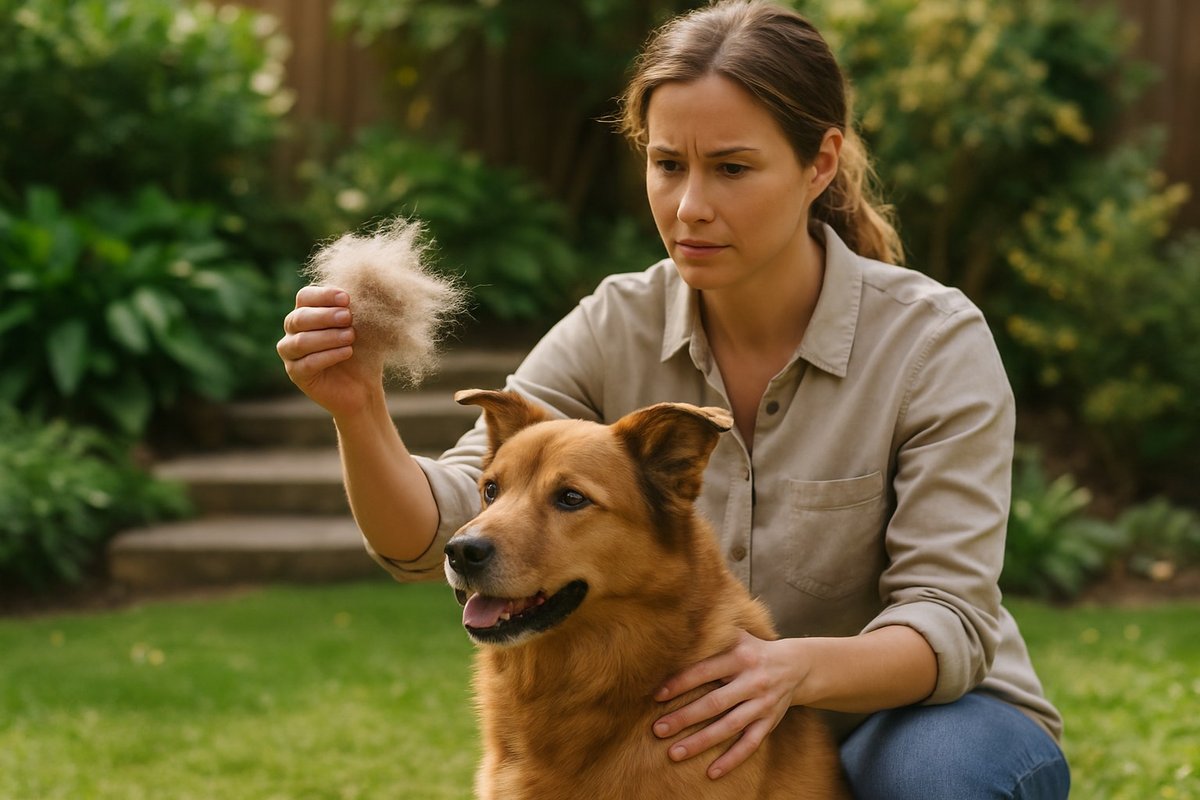
Seasonal shedding is normal. The following are not, and warrant a veterinary conversation sooner rather than later: bald patches or circular areas of hair loss; skin that is red, inflamed, crusting, or actively bleeding from scratching; shedding that continues at high volume well into summer with no sign of slowing; fur that pulls out in large clumps with very little resistance; or any shedding accompanied by weight changes, lethargy, increased thirst, or behavioral shifts. These patterns can point to underlying conditions including hypothyroidism, Cushing's disease, allergies, ringworm, or nutritional deficiencies that need proper diagnosis. When in doubt, have your vet take a look — coat changes are often an early signal of something systemic.
Frequently asked questions
How long does spring shedding usually last?
For most dogs, the peak spring blowout lasts three to six weeks, typically running from late March through early May. Double-coated breeds tend to be on the longer end of that range. If heavy shedding continues past early summer, that's worth discussing with your vet.
Does diet affect how much a dog sheds?
Yes, meaningfully. Diet influences skin barrier health, follicle strength, and the condition of the coat itself. Dogs eating diets low in essential fatty acids, protein quality, or key micronutrients like biotin and zinc tend to shed more irregularly and produce coats that are duller and more brittle. You may not eliminate seasonal shedding through nutrition, but you can reduce excessive or prolonged shedding by closing dietary gaps.
Is it normal for my dog to shed year-round?
It depends on the dog. Some breeds are naturally more continuous shedders. Indoor dogs exposed to artificial light year-round often shed more evenly across all seasons rather than in one spring surge. Year-round shedding is generally normal at low-to-moderate levels. Heavy, non-stop shedding without seasonal pattern is worth investigating.
Can stress cause increased shedding?
Yes. Acute stress — a vet visit, a thunderstorm, travel — can trigger a noticeable release of loose fur almost immediately. Chronic stress elevates cortisol over time, which can disrupt the normal hair growth cycle and lead to increased baseline shedding. If your dog has had a major change recently (new home, new pet, loss of a companion), factor that in.
Do short-haired dogs shed as much as long-haired dogs?
Often yes, and sometimes more noticeably — short fur embeds into fabric rather than staying on the surface, making it harder to remove. Short-haired breeds like Beagles, Boxers, and Labrador Retrievers can be surprisingly heavy seasonal shedders. The individual hairs are just smaller and harder to spot until you sit down in dark pants.
— Megan & the Pup Choice team