The weather finally shifts, the days get longer, and suddenly you're both ready to be outside again. It's one of the better feelings spring has to offer. But if your dog spent most of winter on shorter outings — or barely moving at all on the coldest days — their body has been in a kind of low-activity holding pattern for months.
That matters more than most people realize. Joints stiffen with reduced use. Paw pads soften when they're not regularly exposed to varied terrain. Cardiovascular fitness dips. And hydration habits, which are easier to manage in cool weather, become a real concern the moment temperatures climb and exertion increases. Before you add miles to your dog's routine, it's worth taking a few minutes to think through what they actually need from you right now.
Why winter affects your dog's body more than you might think
Dogs are adaptable, but they're not immune to deconditioning. A dog who went from daily 45-minute walks down to two quick loops around the block for three or four months has lost some of the muscular and cardiovascular baseline that supported those longer outings. This is especially true for older dogs and larger breeds — the ones already carrying more stress on their joints under normal circumstances.
Cold weather also affects joint fluid viscosity. Synovial fluid — the lubricant inside your dog's joints — moves less freely in the cold, and a dog who's been less active has had fewer opportunities to "warm up" that system naturally. You may have noticed your dog moving a little stiffly after a nap on a cold morning. That same dynamic applies at a broader seasonal level.
Large breeds and senior dogs carry more risk
If you have a Labrador, Golden Retriever, German Shepherd, or any dog over eight years old, the gap between "how they feel" and "what their joints can actually handle" is worth keeping in mind. These dogs will often push through discomfort because they want to be with you. The enthusiasm you see at the leash doesn't always reflect what's happening in their hips and knees.
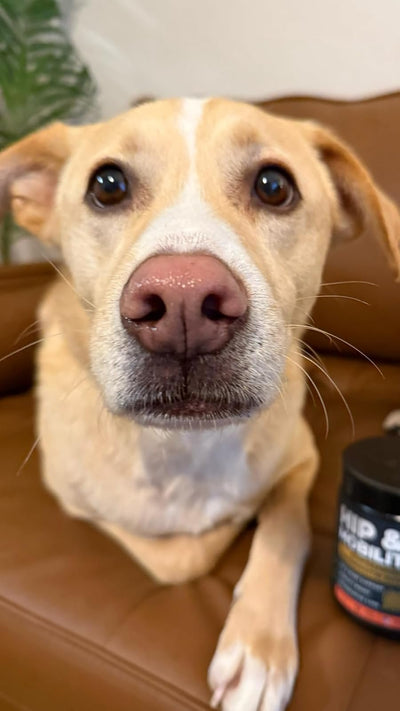
For dogs with any existing mobility concerns, supporting joint tissue before ramping up activity — rather than after you notice a problem — is the more practical approach. A daily supplement with ingredients like glucosamine, chondroitin, and turmeric can help maintain the cushioning and flexibility joints need when activity increases. Pup Choice makes hip and joint mobility chews with 500 mg glucosamine, collagen, and chondroitin that work well as an ongoing foundation, not just a reactive fix.
Paw pads: the part of your dog you're probably not checking
Paw pads are living tissue. They toughen with regular use on varied terrain and soften when your dog has been spending most of their time on carpet and hardwood. After a winter of limited outdoor exposure, many dogs head into spring with pads that are noticeably more delicate than they were in October.
Add in the transition from cold, potentially icy surfaces to warm pavement, gravel paths, and dry dirt trails — and you have a recipe for cracking, soreness, or raw spots appearing faster than you'd expect. A two-mile walk that would have been routine in September might leave tender pads in April.
What to do before and after walks right now
Inspect pads before and after walks for the first few weeks of increased activity. Look for small cracks, redness at the edges, or any spots where your dog is reluctant to let you touch. A paw balm can help — but the bigger fix is gradual buildup. Add distance slowly over two to three weeks rather than jumping from a 20-minute walk to an hour on day one.
If the terrain in your area shifts quickly from cold to hot pavement, the 7-second rule is worth knowing: press the back of your hand to the pavement for seven seconds. If it's uncomfortable for you, it's likely too hot for your dog's pads.
Hydration in spring: easier to underestimate than you'd think
Dogs don't sweat the way humans do. They regulate heat primarily through panting, and that process uses a significant amount of moisture. In winter, the combination of cooler temperatures and lower exertion levels means most dogs stay reasonably hydrated without much intervention. Spring changes that equation.
Even at mild temperatures — 55 or 60 degrees — a dog working hard on a longer walk can lose more water than their typical drinking habits replace. This is compounded by the fact that spring air is often drier than summer air, and dogs coming off a winter routine simply aren't conditioned to drink as much as they'll need once activity picks up. 🐾
Practical steps: bring water on any walk over 20 minutes, offer it proactively rather than waiting for your dog to seem thirsty, and encourage drinking before you leave the house. Adding a small amount of low-sodium broth to a water bowl can prompt reluctant drinkers to take in more fluid.
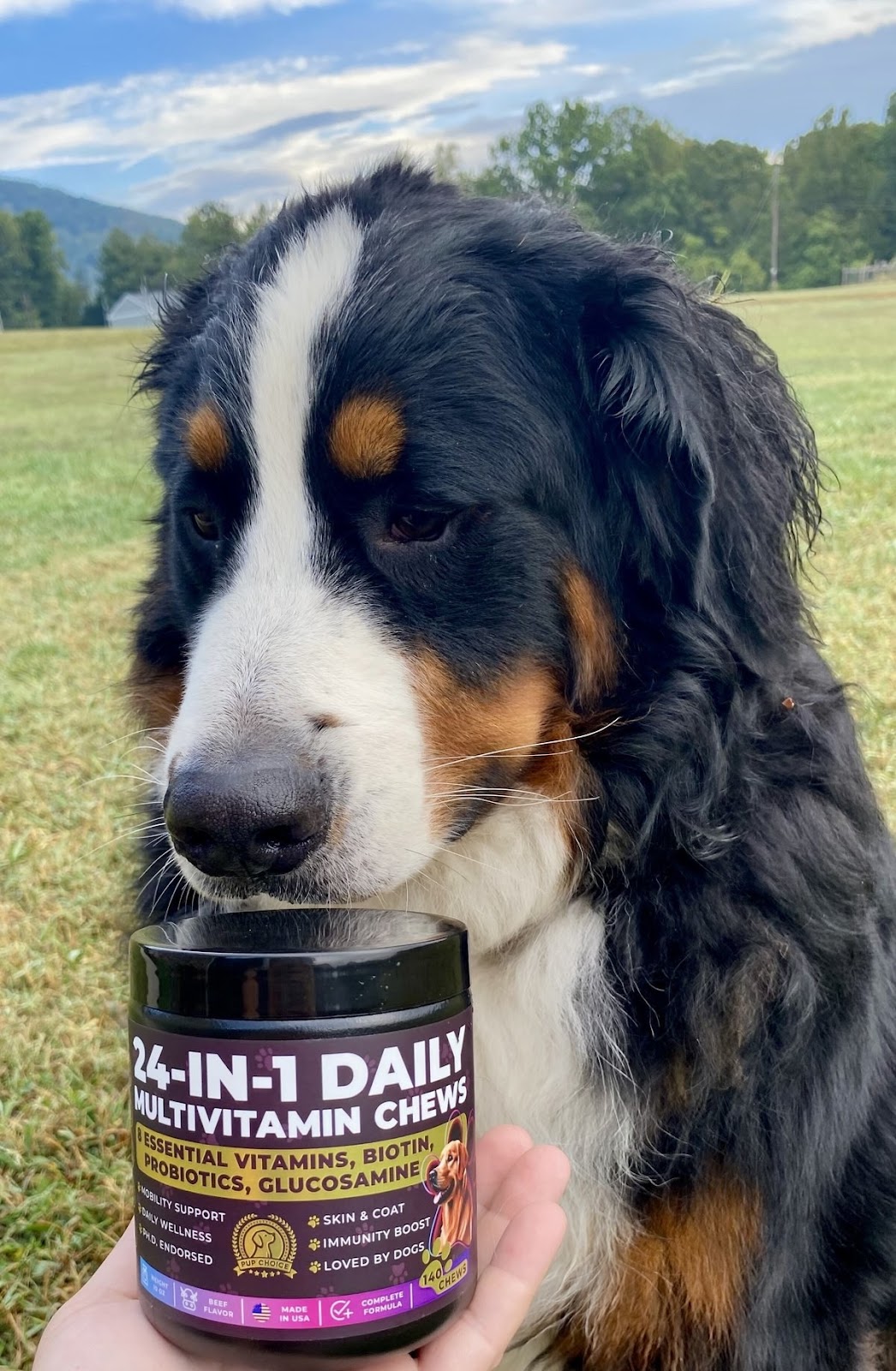
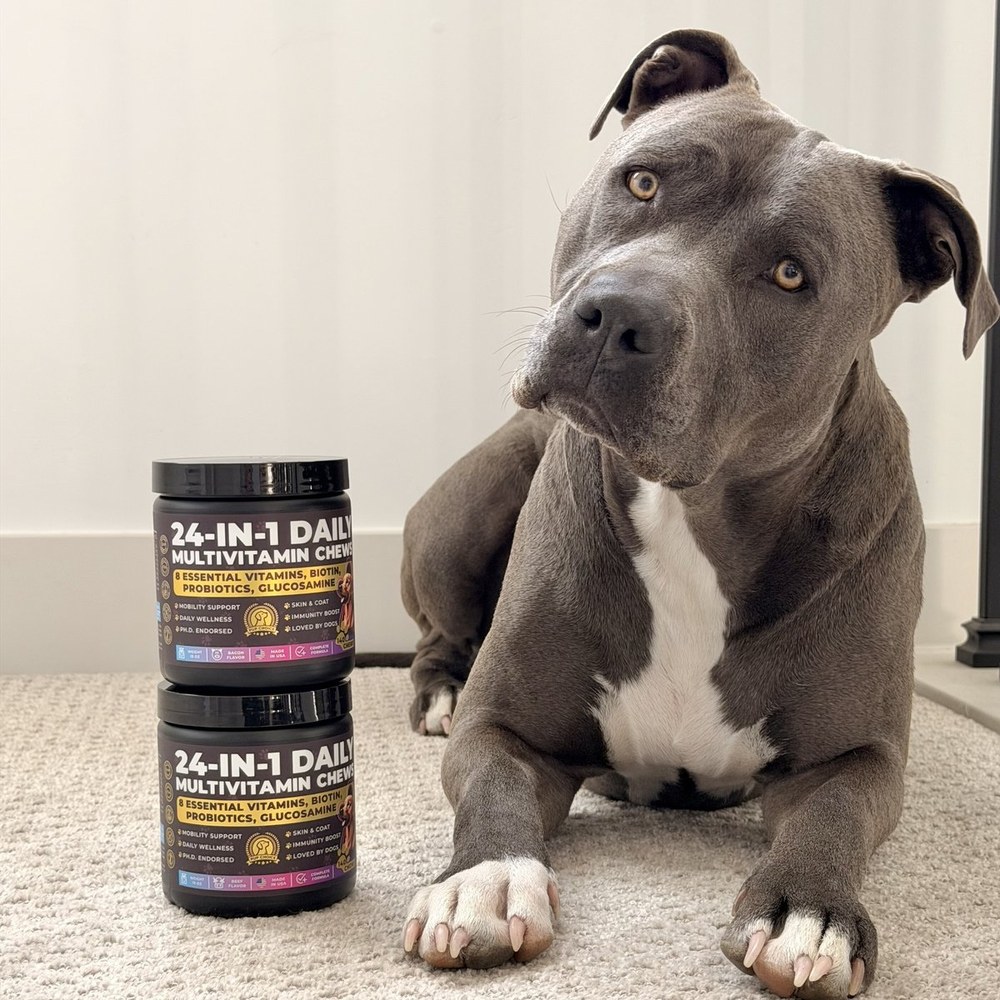
Nutrition plays a supporting role here too. A dog whose overall micronutrient intake is solid — B vitamins, biotin, probiotics for gut health — is generally better equipped to handle physical stress and recover from exertion. If you're not already using a daily multivitamin, this time of year is a reasonable moment to start. The 24-in-1 daily multivitamin chews with probiotics, biotin, and glucosamine offer a broad baseline in a single daily chew, which is a straightforward way to fill in gaps without overcomplicating your dog's routine. 🌿
When to call your vet
Mild stiffness after an unusually long first walk isn't automatically cause for alarm — some next-day soreness is normal, the same way it is in humans returning to exercise. But certain signs warrant a conversation with your veterinarian rather than a wait-and-see approach. Limping that persists more than 24 hours after a walk, swelling in a joint, a dog who is reluctant to put weight on a limb, or sudden behavioral changes around activity (refusing walks they previously enjoyed, yelping when getting up) are all worth a call. The same goes for any paw injury that looks deeper than surface-level dryness — cracked pads can become infected quickly, especially in dogs who are getting back out on varied terrain after a period of softer surfaces.
If your dog has an existing orthopedic diagnosis — hip dysplasia, luxating patella, degenerative joint disease — loop in your vet before significantly increasing distance or pace. What's appropriate for a healthy four-year-old Lab is not necessarily appropriate for a dog with a known structural issue, even if they seem eager and willing.
Frequently asked questions
How long should a dog's first spring walk be after a quiet winter?
Start closer to what your dog was doing regularly during winter, not what they were doing last fall. If winter walks were 15–20 minutes, keep the first few spring walks in that range and add 5–10 minutes every few days as tolerated. The goal is gradual buildup over two to three weeks before attempting significantly longer distances.
What are the signs my dog's paws are sore after a walk?
Watch for excessive licking or chewing of the paws after returning home, reluctance to walk on certain surfaces, visible cracking or redness on the pads, or a subtle change in gait — favoring one paw or walking more carefully than usual. Any open wound or bleeding on the pad should be cleaned and covered, and a vet visit is appropriate if the area looks deep or inflamed.
Can I give my dog glucosamine before they show joint problems?
Yes, and many veterinarians recommend it as a preventive measure for large breeds and dogs over five or six years old. Glucosamine supports the production and maintenance of cartilage, and it's generally more effective as an ongoing foundation than as a short-term response after problems appear. Results are cumulative, so consistency matters more than dosage timing.
How do I know if my dog is dehydrated after a walk?
The tent test is a quick field check: gently pinch the skin on the back of your dog's neck and release it. In a well-hydrated dog, skin snaps back immediately. Slow return suggests dehydration. Other signs include dry or tacky gums, sunken eyes, and lethargy beyond normal post-walk tiredness. If your dog shows multiple signs, offer water slowly and contact your vet if they're not improving.
Are multivitamins actually necessary for dogs who eat complete commercial food?
In theory, a complete and balanced commercial diet covers baseline needs. In practice, individual dogs vary in how well they absorb certain nutrients, and factors like age, activity level, stress, and gut health all affect utilization. A daily multivitamin isn't a substitute for good diet, but it can help bridge gaps — particularly for active dogs, seniors, or dogs coming back into heavier exercise after a lower-activity period.
— Megan & the Pup Choice team