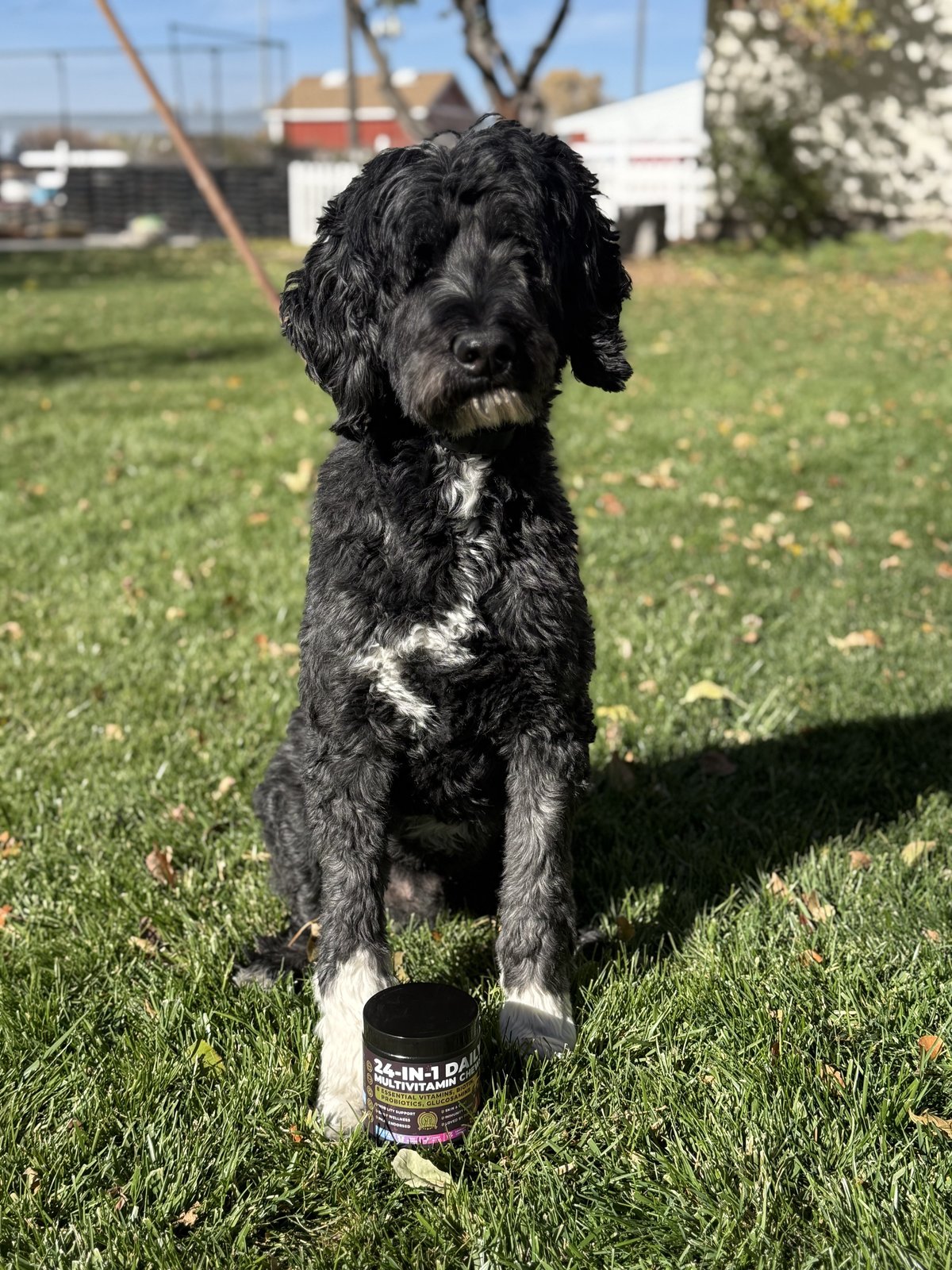
Storm season is back. And for a lot of dog owners, that means watching their otherwise confident, happy dog completely fall apart at the first rumble in the distance. The panting. The pacing. The clawing at the bathroom door. The full-body trembling that doesn't stop until an hour after the last raindrop falls.
If this sounds familiar, you're not imagining things — and your dog isn't being dramatic. Thunderstorm anxiety is one of the most common and most misunderstood behavioral issues in dogs. Understanding what's actually happening underneath the panic is the first step toward helping them through it.
It's not just the noise — it's a full sensory storm

Most people assume their dog is scared of the loud bang of thunder. And yes, the sound is part of it. But dogs who suffer from storm anxiety are typically reacting to a whole cluster of sensory changes happening at the same time — many of which humans can't even perceive.
Before a storm arrives, barometric pressure drops. The electrical charge in the air shifts. Humidity rises. Wind patterns change. Dogs have sensory systems finely tuned to detect all of this, and research suggests they may begin feeling the effects of an incoming storm well before it's visible or audible. By the time thunder rolls, their nervous system has already been on high alert for a while.
There's also evidence that static electricity plays a significant role. During thunderstorms, dogs can build up static charge in their fur — particularly long-haired breeds or dogs with double coats — and that charge can cause uncomfortable tingling sensations across their skin. This may explain why so many storm-anxious dogs frantically seek out grounded spaces: bathtubs, tile floors, basements. They're not just hiding from sound. They're trying to discharge an uncomfortable physical sensation they can't explain or escape.
Why some dogs are so much worse than others
Storm phobia doesn't affect all dogs equally, and the reasons why are still being studied. Breed plays a role — herding breeds like Border Collies and Australian Shepherds tend to show higher rates of noise sensitivity, possibly due to the heightened sensory awareness that makes them excellent working dogs. Rescue dogs with unknown histories may have had early trauma that primes their threat-detection systems to overreact.
Age matters too. Many dogs develop or worsen storm anxiety between ages two and four, as their brains fully mature and their threat-response systems become more sophisticated. A dog who sailed through puppyhood unbothered can start showing real distress as an adult — which can feel confusing and sudden to owners who thought they were in the clear.
Genetics and early socialization also interact in ways that aren't fully understood yet. What we do know is that if your dog is struggling, it's not a training failure on your part. It's a stress response that's genuinely uncomfortable for them, and it deserves a thoughtful approach. 🐾
What you can actually do during a storm
There's no universal fix, but there are several strategies that consistently help — and a few common instincts that can accidentally make things worse.
Create a predictable safe space. If your dog gravitates toward a specific spot during storms (the bathtub, a closet, behind the couch), let them go there. Don't coax them out in an attempt to "expose" them to the storm — that approach requires careful, gradual desensitization over weeks, not in the middle of an active threat response. During the storm itself, the goal is comfort, not training.
Reduce static charge where possible. Some owners find that anti-static sprays designed for pet fur, or simply wiping down their dog with an unscented dryer sheet, reduces storm-related distress. The evidence is anecdotal but the mechanism is plausible, and it costs almost nothing to try.
Use pressure and sound strategically. Snug-fitting anxiety wraps (like Thundershirts) help some dogs significantly. White noise or music played at a moderate volume can partially mask thunder. Neither works for every dog, but they're low-risk options worth trialing before storm season peaks.
Stay calm yourself. Dogs are extraordinarily good at reading human emotional states. If you hover anxiously, speak in an elevated, worried tone, or rush to soothe them every thirty seconds, you may unintentionally signal that there really is something to be afraid of. You can absolutely comfort your dog — that won't "reinforce" anxiety in the way an older school of training believed — but your own energy matters. Calm, grounded presence is the most useful thing you can offer.
Supporting the nervous system beyond storm season
For dogs with moderate to severe anxiety, managing individual storms is only part of the picture. A chronically stressed dog — one whose baseline cortisol is already elevated heading into spring — tends to react more intensely to each new trigger. Building a foundation of daily nutritional support can make a meaningful difference in how resilient your dog's system is overall.
Nutrients like B vitamins play a role in nervous system regulation, and magnesium deficiency has been linked to heightened stress responses in mammals broadly. A comprehensive daily supplement that covers these nutritional gaps, like a 24-in-1 multivitamin formulated to support your dog's daily systemic health, isn't a storm anxiety cure — but filling nutritional gaps is a reasonable component of a broader plan for anxious dogs. Think of it as building the floor, not solving the problem on its own.
When to call your vet
If your dog's storm anxiety is severe — meaning they injure themselves trying to escape, refuse food for extended periods after storms, or show signs of distress that don't resolve within an hour or two of the storm ending — this is worth a direct conversation with your veterinarian. There are prescription anti-anxiety medications (including situational options that can be given before a predicted storm) that are safe, well-studied, and genuinely life-improving for dogs at the severe end of the spectrum. Behavioral medication isn't a last resort. For some dogs, it's simply the right tool.
Also watch for physical symptoms that can look like anxiety but may have another cause: sudden onset of storm fear in a previously unbothered older dog can occasionally signal an underlying neurological or pain issue, particularly if it's accompanied by other behavioral changes. When in doubt, rule out the physical first. 🌩️
Frequently asked questions
Can dogs actually predict thunderstorms before they happen?
In a practical sense, yes. Dogs can detect drops in barometric pressure, shifts in electromagnetic fields, and changes in humidity and wind — all of which precede a storm. This is why many dogs begin showing anxious behaviors 30 minutes to an hour before thunder is audible to human ears. It's not a sixth sense so much as an extremely well-developed version of the five they already have.
Is it bad to comfort my dog during a thunderstorm?
No — comforting your dog does not reinforce fear or teach them that being scared is rewarding. That idea stems from older behavioral theories that have largely been walked back. Calm, physical comfort can actually help regulate a stressed dog's nervous system. The key word is "calm" — anxious hovering from you can raise the emotional temperature, but gentle, steady reassurance is fine.
Why does my dog's storm anxiety seem to be getting worse every year?
Storm phobia often intensifies with each exposure if the dog doesn't have tools to cope, because each unmanaged fear response reinforces the threat association in the brain. Without some form of active support — environmental management, behavioral intervention, or in severe cases medication — the pattern tends to escalate over time rather than resolve on its own.
Are certain dog breeds more prone to thunderstorm anxiety?
Yes. Herding breeds (Border Collies, Australian Shepherds, Shelties), sporting breeds (Pointers, Vizslas), and working breeds often show higher rates of noise and storm sensitivity. That said, any individual dog can develop storm phobia regardless of breed. A dog's early experiences, socialization history, and genetic temperament all play a role.
What's the difference between storm anxiety and general anxiety in dogs?
Some dogs have anxiety that's specifically tied to storms and loud noises, and are calm and confident in all other situations. Others have a more generalized anxiety that makes them reactive to many things, with storms being one of the worst triggers. The distinction matters because the approaches differ — situational anxiety can often be managed with targeted interventions, while generalized anxiety usually benefits from a more comprehensive behavioral and nutritional strategy. A vet or veterinary behaviorist can help you identify which pattern fits your dog.
Storm season doesn't have to mean dreading every dark cloud. With the right setup, a calm environment, and attention to your dog's overall health, most anxious dogs can get through the season with a lot less suffering — and so can you.
— Megan & the Pup Choice team