
Every spring, thousands of dog owners type some version of the same question into Google: Why does my dog keep licking his paws? Or: Why is my dog so itchy in May but fine in January? If the timing lines up with blooming trees, freshly cut grass, or the general explosion of pollen that coats every car in your neighborhood, you are almost certainly looking at environmental allergies — also called seasonal atopic dermatitis.
This is not a food allergy, and it does not mean something is wrong with what you are feeding your dog. It means his immune system is reacting to airborne and contact allergens that are completely unavoidable this time of year. Understanding what is actually happening — and what you can do about it — makes the next few months a lot more manageable for both of you.
What triggers seasonal allergies in dogs?
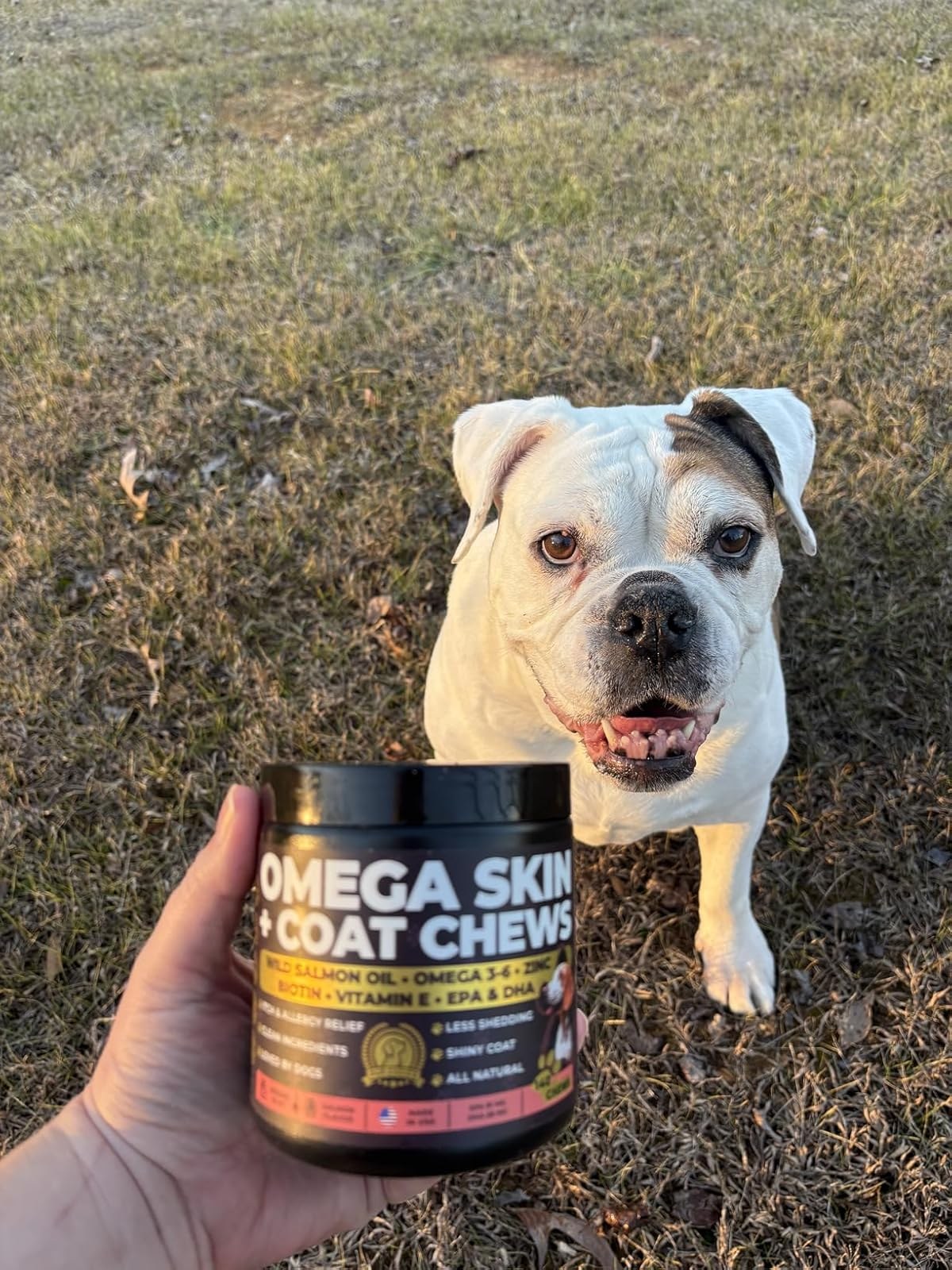
Dogs experience allergic reactions differently than humans do. When we are allergic to pollen, we sneeze and our eyes water. Dogs process most of their allergic responses through their skin. The immune system identifies a harmless particle — tree pollen, grass pollen, mold spores, even tree sap residue — as a threat, and the resulting inflammatory response shows up as intense itching, redness, and irritation.
The most common environmental triggers in spring include:
- Tree pollen — oak, birch, cedar, and maple are among the worst offenders, typically peaking in March through May depending on your region
- Grass pollen — Timothy grass, Bermuda grass, and Kentucky bluegrass release pollen that settles on your dog's coat and paws during walks
- Mold spores — wet spring soil and decomposing leaves harbor mold that becomes airborne in warm weather
- Tree sap and resin — direct contact with certain trees or freshly fallen bark can cause localized skin reactions
- Dust mites — while present year-round, they often spike as homes are opened up and cleaned in spring
Pollen is particularly insidious because it is microscopic and gets trapped in your dog's coat during every outdoor walk. When your dog then lies down, rolls over, or chews at his paws, he is essentially rubbing the allergen directly into the skin — which is why the paws, belly, groin, armpits, and face are the most commonly affected areas.
Why the paws specifically?
The paws are ground zero for environmental allergen exposure. Every step your dog takes on grass or pavement during peak pollen season deposits allergens between the toes and into the sensitive skin of the paw pads. The warm, slightly moist environment between the toes is also prone to secondary yeast overgrowth when the skin barrier is already compromised by inflammation — which creates that distinctive corn-chip or musty odor some owners notice. What starts as an allergic itch can become a more complex skin issue if the cycle of licking continues unchecked.
How to tell if it is seasonal allergies versus something else
Seasonal pattern is the biggest clue. If your dog is itchy primarily in spring and fall, and relatively comfortable in the dead of winter, environmental allergies are a strong working theory. Food allergies, by contrast, tend to cause year-round symptoms that do not track with the seasons.
Common signs of seasonal environmental allergies in dogs:
- Persistent paw licking or chewing, particularly after outdoor time
- Rubbing the face against carpet, furniture, or grass
- Redness or discoloration (rust or pink staining) between the toes from saliva
- Recurrent ear infections in spring and summer
- Itchy, red patches on the belly, groin, or armpits
- Watery eyes or mild sneezing (less common than skin signs, but possible)
If your dog shows these signs seasonally and has been otherwise healthy, a conversation with your veterinarian is a reasonable first step before assuming a diagnosis on your own.
When to call your vet
Mild seasonal itching can often be managed at home, but some situations warrant a professional evaluation sooner rather than later. Contact your veterinarian if your dog's skin is raw, cracked, or bleeding from repeated licking; if you notice swelling, hot spots, or thick discharge from the ears; if symptoms are severe enough to disrupt sleep; or if over-the-counter approaches have not provided any relief after a few weeks. A vet can confirm whether atopic dermatitis is the right diagnosis, rule out secondary infections, and discuss prescription options like Apoquel or Cytopoint if the allergic response is severe. Early intervention usually prevents a manageable itch from turning into a full skin infection. 🐾

Practical steps to reduce your dog's exposure and discomfort
You cannot eliminate pollen from spring, but you can meaningfully reduce how much of it ends up on and in your dog's skin.
Wipe paws after every outdoor walk. A damp cloth or a dedicated paw rinse removes the majority of surface-level allergens before your dog has a chance to lick them in. Some owners keep a small basin of water near the door during peak season. This single habit makes a measurable difference.
Bathe more frequently. During high-pollen weeks, a bath every seven to ten days (using a gentle, fragrance-free shampoo formulated for sensitive skin) removes allergens from the coat. Over-bathing can strip natural oils, so stick to a moderate schedule rather than bathing daily.
Check local pollen counts. Most weather apps and sites like pollen.com publish daily counts by allergen type. On high oak or grass pollen days, keeping walks shorter and avoiding fields or heavily wooded areas can reduce exposure.
Support the skin barrier from the inside. A dog whose skin barrier is functioning well is more resilient against environmental allergens. Healthy skin requires adequate intake of key nutrients — particularly biotin, zinc, and essential fatty acids. A daily multivitamin formulated to support coat and skin health can help fill nutritional gaps that might otherwise leave the barrier more permeable to allergens. This is not a replacement for allergy management, but it is a useful foundation. 🌿
Keep indoor air clean. Running an air purifier with a HEPA filter in the rooms where your dog spends the most time captures airborne pollen and mold spores that drift in through doors and windows. Washing your dog's bedding weekly during peak season also removes accumulated allergens.
Consider a probiotic or gut-support supplement. There is a growing body of research connecting gut microbiome health to immune regulation, including allergic responses. Dogs with a well-balanced gut flora may mount less exaggerated immune reactions to environmental triggers. A supplement that combines probiotics alongside daily vitamins addresses both angles without adding multiple products to your routine.

Frequently asked questions
Can dogs develop seasonal allergies later in life, even if they were fine as puppies?
Yes. Atopic dermatitis in dogs typically develops between one and three years of age, but it is not uncommon for dogs to show their first significant allergic response at five or six years old. Repeated exposure to allergens over time can sensitize the immune system, so a dog who seemed unbothered in previous springs may cross a threshold and become symptomatic. Age-related changes in skin barrier function can also play a role.
Is paw chewing always allergies, or could it be something else?
Paw chewing has several possible causes: environmental allergies are the most common in spring, but anxiety and boredom can also produce repetitive licking behavior. Injuries, foreign bodies (like a splinter or grass seed embedded between the toes), contact dermatitis from lawn chemicals, and yeast or bacterial infections are also worth ruling out. If the licking is isolated to one paw rather than all four, an injury or localized irritant is more likely than systemic allergies.
Do antihistamines work for dogs with seasonal allergies?
Antihistamines like diphenhydramine (Benadryl) are sometimes used in dogs, but their effectiveness for canine atopic dermatitis is modest at best — research suggests they help only a subset of dogs. They are generally safe at appropriate doses, but the sedation side effect can be significant, and they do not address the underlying inflammatory response as effectively as newer prescription options. Always confirm dosing with your vet before giving any human medication to a dog.
How long does spring allergy season last for dogs?
It depends on your geographic region and which specific allergens affect your dog. Tree pollen typically peaks from late February through May. Grass pollen takes over from May through July in many parts of the country. If your dog is sensitive to both, he may be uncomfortable from late winter through midsummer. Fall brings a second wave of mold spores and certain weed pollens. Dogs with year-round symptoms are more likely dealing with perennial allergens like dust mites or a food component.
Should I change my dog's diet during allergy season?
Changing to a novel-protein or hydrolyzed diet is a strategy for diagnosing and managing food allergies, not environmental ones. That said, diet quality can influence skin barrier integrity and immune function. Ensuring your dog gets adequate omega fatty acids, biotin, and zinc year-round — whether through food or a well-formulated supplement — gives the skin the best chance of holding up against environmental triggers. A poor-quality diet does not cause pollen allergies, but a nutrient-rich one can make the skin more resilient.
Seasonal allergies are genuinely uncomfortable for dogs, but they are also one of the more manageable chronic health challenges once you understand what is driving the symptoms. A combination of smart environmental management, consistent grooming habits during peak season, and thoughtful nutritional support gives most dogs significant relief without immediately jumping to prescription medications. That said, there is no one-size-fits-all solution — your vet is the right partner for anything that goes beyond mild seasonal itching.
— Megan & the Pup Choice team